Gaming clubs · Esports
Internet café management system
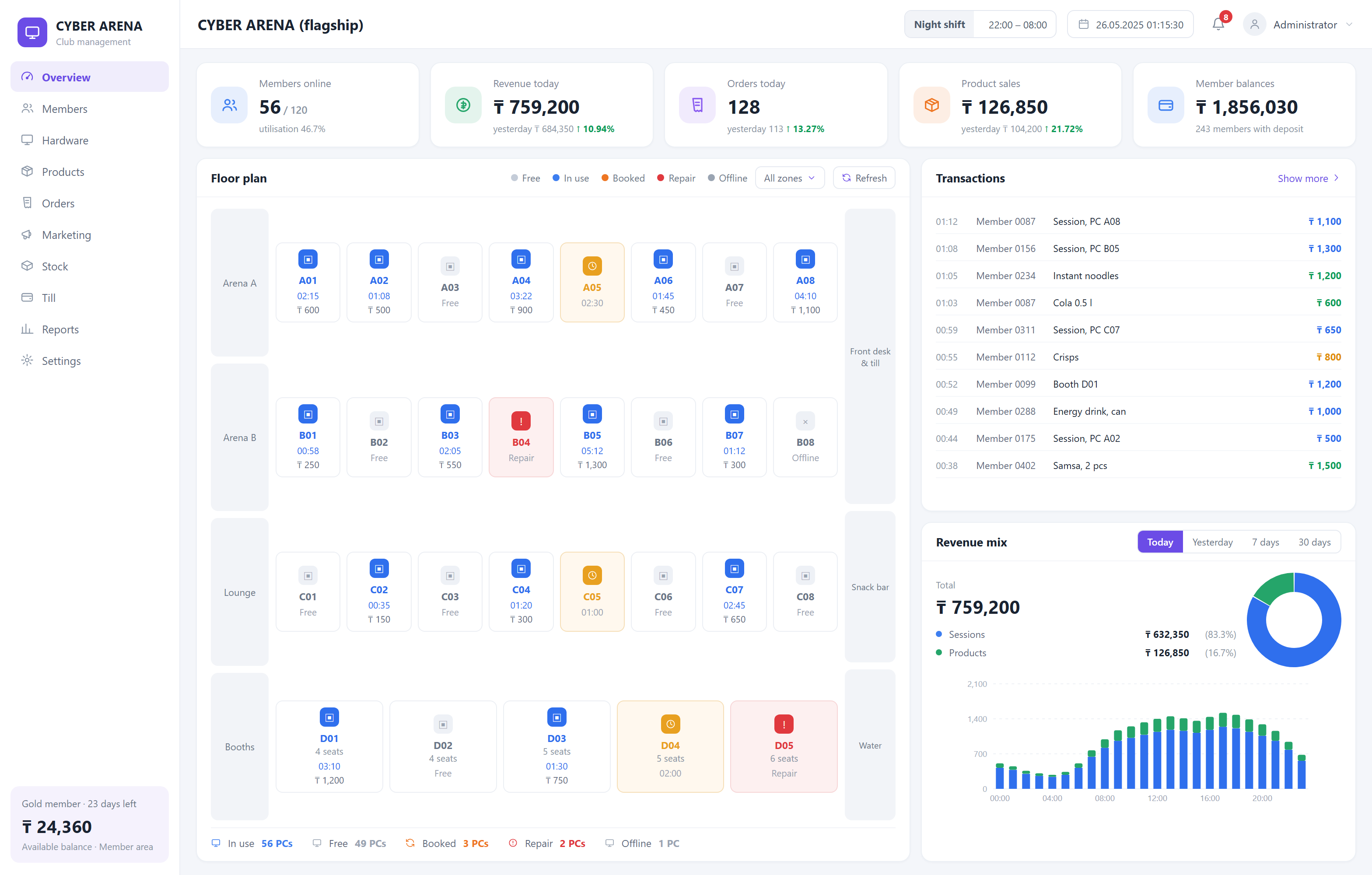
Starting a session, billing time, topping up, selling snacks — the money in a gaming club is spread across many small transactions, and once it gets busy things slip. This system puts seat status, client balances and retail on one screen, and generates the daily close automatically at shift handover.
What it solves
Who is where, and until when, lives in someone head
The floor map shows free, in use and needs cleaning in real time. Remaining time is visible at a glance — no more walking the floor to check.
Shifts do not reconcile
Cash, top-ups and retail sales are collected per shift automatically. Handover produces a daily report in one click, so responsibility is clear.
Balance disputes
Top-ups, bonuses and spending are all recorded. Clients can review their own history at any time, which removes most arguments.
Before and after
- Which seat is busy and how much time is left is only tracked in memory
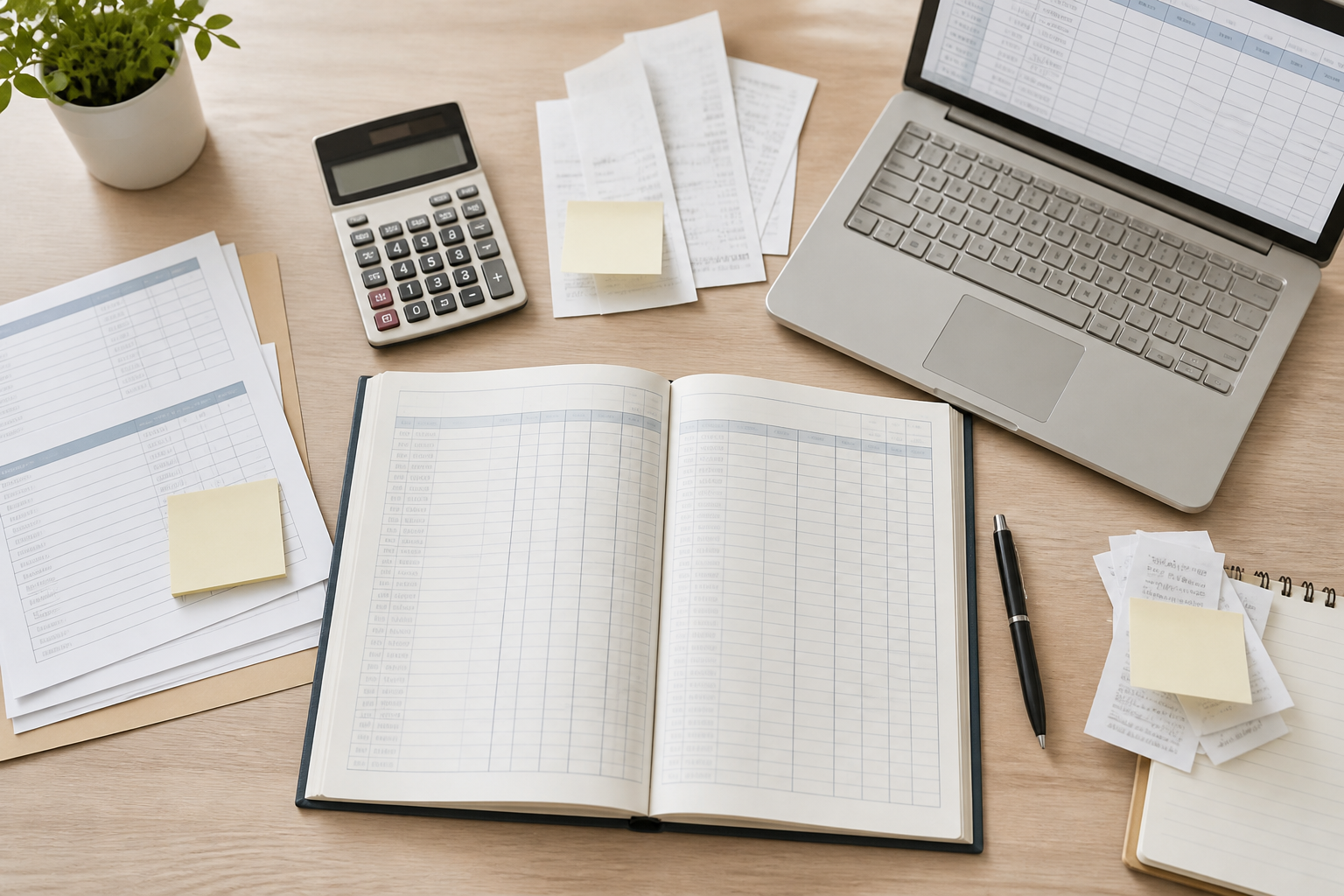
- Cash, top-ups and snack sales sit in three separate notebooks that never agree
- Shift handover takes half an hour and still leaves discrepancies
- There is nothing to prove a client balance, so arguments happen at the desk
- A live floor map shows the remaining time on every seat at a glance
- Time, top-ups and retail all land in the same set of books
- The daily report is one click, and responsibility is clear
- Every top-up and charge is recorded, and clients can check it themselves
Capabilities
Visual floor map: free / in use / needs cleaning
Hourly billing, time packages, member pricing
Stored balance, bonus credit and transaction history
Client registration by ID document at the desk
Drinks, snacks and merchandise sales with stock tracking
Separate pricing for VIP rooms and the esports zone
Shift handover, daily close and revenue reports
Internet cafés, esports arenas, gaming lounges, and any venue billing by time that needs to manage seats.
FAQ
Does software need to be installed on every PC?
Billing and client management only need the front desk workstation. If you want automatic screen lock and cut-off when time runs out, we deploy a lightweight client on the gaming machines.
What happens if the internet goes down?
The system can run locally — data lives on a machine in your venue and does not depend on an external connection.
How much does a system cost?
It depends on the feature set, how many locations you have and whether hardware integration is needed. Using a ready module costs significantly less than building from zero. We can give a range after the first conversation, and once the scope is agreed the price is fixed — we do not bill by the hour.
How soon can we start using it?
If the module is used largely as-is, 2–3 weeks. If it needs substantial adaptation to your process, usually 4–6 weeks. The timeline is stated in the proposal.
Where is the data stored? Can it be on our own server?
It can. By default the system runs on servers we maintain, which is simpler for you. If you have compliance or internal control requirements, we deploy entirely on your server or on a machine in your premises, and data never leaves your network.
Other systems
Gym membership system
Retire the paper log and the spreadsheet: memberships, personal training and renewal reminders in one place.
QR self-ordering system
Guests scan, order and pay themselves while the order goes straight to the kitchen — fewer queues, fewer mistakes, lower staffing cost.
Retail loyalty system
Turns one-time shoppers into regulars — points, coupons and purchase history stay with you.